Total Guide To Research Peptide Reconstitution 2025
How Long Do Peptides Last In The Fridge: Total Refrigeration Guide
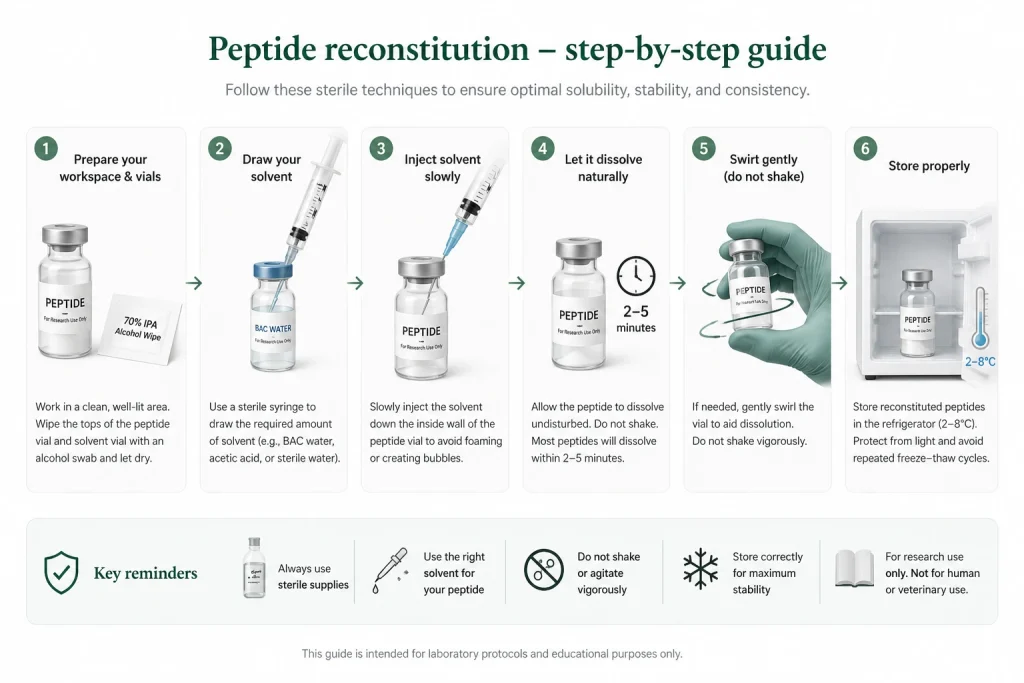
For vials you intend to make use of within a few months, refrigerating at 2-8 ° C (36-46 ° F) is the appropriate technique. General intensifying method and peptide stability data support a fridge home window of 3-6 months for lyophilized peptides saved under these problems. Keep the vial secured, in its original packaging, and away from moisture and light. Carefully swirl the vial instead, or merely allow it sit for a couple of minutes.
Storage Space Summary: Lyophilised Vs Reconstituted
More delicate peptides gain from the most stable temperature areas while durable peptides endure much less optimal places. Travel and shipping circumstances call for short-lived deviation from cooled storage. Shielded containers with cold pack maintain cool temperature levels during transport. For trips under 1 day, this method properly protects most peptides. The temperature is cold enough for considerable security extension while remaining functional Peptide Manufacturer for regular accessibility. Unlike frozen storage space, refrigerated peptides call for no thawing prior to use.
Bacteriostatic Mixing Water 10ml
In lyophilized (freeze-dried) form, retatrutide is considerably much more steady than when reconstituted. Maintain secured and safeguarded from wetness in any way times. For typical research protocols using bacteriostatic https://northpixelate.com/s/-FCp4OVhCyzB_9iiFzfbx water, pH modification is generally unnecessary. The neutral pH of bacteriostatic water supplies a sensible balance across numerous deterioration pathways. Semaglutide needs careful focus to storage space because of its widespread use in weight reduction and body structure research study. Pharmaceutical-grade semaglutide in pre-filled pens has manufacturer-specified life span of 30 to 45 days after very first use, kept at 2-8C.
- It makes it possible for hydrolysis, the chemical reaction where water particles attack peptide bonds and break the amino acid chain into fragments.
- That financial investment pays for itself within the very first few months of maintained effectiveness.
- The schedule of generic GLP-1 options is likewise expanding.
- Never ever leave reconstituted peptides in a hot vehicle, also for mins.
Cysteine-containing peptides deal with similar difficulties. Cysteine residues can form disulfide bonds with each other or oxidize to cysteic acid. Either path changes the peptide framework and possibly its biological activity. Peptides containing cysteine, methionine, or tryptophan are especially at risk to oxidation. These amino acids have sulfur or aromatic frameworks that react easily with oxygen and responsive oxygen types. The vital concept is matching storage temperature to planned usage timeline.
Brownish-yellow glass vials supply built-in light protection. The brownish-yellow color removes many UV and visible light wavelengths that drive photodegradation. If your vials are clear glass, cover them in light weight aluminum foil. This simple step can meaningfully extend life span, particularly if your refrigerator has an inner light that activates every time you open the door.